Sensitive Skin Skincare: How to Read Ingredient Labels and Choose Barrier-Supporting Products
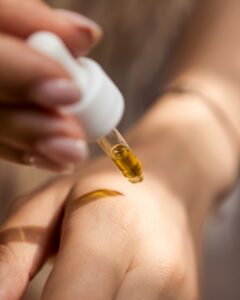
In our National Beauty Month guide, we explored how barrier health, hormones, stress physiology, and the gut–skin axis influence skin sensitivity. We looked at the internal drivers — the biological systems shaping how your skin behaves.
Now let’s shift the lens outward.
Because once you understand why your skin reacts, the next powerful step is learning how to choose products with intention. Not based on marketing claims. Not based on trends. But based on formulation logic and ingredient literacy.
Sensitive skin does not require fewer products. It requires better decisions. And those decisions begin with understanding what’s actually inside the bottle.
The Truth About “For Sensitive Skin” Labels
If you’ve ever stood in a skincare aisle, you’ve likely noticed how many products are labeled “for sensitive skin.” It sounds reassuring. But here’s something many consumers don’t realize: in most markets, that phrase is not tightly regulated.
A product can be labeled for sensitive skin without meeting standardized criteria. That doesn’t mean those products aren’t helpful — it simply means the front label should not be your only guide. Instead, turn the bottle around.
The ingredient list tells a more honest story. A thoughtfully formulated product for reactive skin often has a focused ingredient list. Not minimal for the sake of minimalism — but purposeful. Ingredients should serve a function. Support hydration. Reinforce lipids. Calm inflammation. Maintain pH balance.
When you learn to read labels with intention, you begin to recognize patterns. And that’s when your skincare decisions shift from reactive to strategic.
Understanding What Sensitive Skin Actually Needs
At its core, sensitive skin benefits from structural support. The barrier — that thin but powerful outer layer — depends on a specific lipid composition to function properly. Ceramides, cholesterol, and fatty acids are not trendy ingredients. They are foundational.
When you see ceramides listed on a moisturizer, you are looking at ingredients that mirror the skin’s own architecture. When cholesterol is included alongside them, that signals a formulation designed to strengthen barrier integrity rather than simply hydrate temporarily.
Hydration itself also requires nuance. Humectants like glycerin have decades of research supporting their ability to draw water into the skin and improve barrier recovery. Glycerin is often overlooked because it is common — but common does not mean ineffective. In fact, it is one of the most reliable ingredients for sensitive skin.
Hyaluronic acid can also be beneficial, particularly when paired with occlusive ingredients that prevent water from evaporating. Without that protective layer, humectants may not provide lasting comfort.
This is where formulation synergy matters. Sensitive skin thrives when ingredients are not just individually beneficial, but thoughtfully combined.
Actives and Sensitive Skin: It’s About Rhythm, Not Avoidance
A common misconception is that sensitive skin must avoid active ingredients entirely. In reality, actives like retinol or exfoliating acids can offer meaningful benefits — when introduced with respect for the barrier. The key is rhythm.
Exfoliating acids, for example, are powerful tools for improving texture and tone. But for reactive skin, frequency often matters more than strength. A lower percentage used once weekly may be more effective — and far better tolerated — than a stronger acid used too often.
Retinoids follow a similar principle. Sensitive skin can absolutely benefit from retinol’s collagen-supporting effects. The difference lies in how it is introduced. Starting with a low concentration and spacing applications several days apart allows the skin to adapt gradually. Pairing retinol with a nourishing moisturizer, either before or after application, can further reduce irritation potential.
Fragrance, Essential Oils, and Sensory Reactivity
Fragrance is one of the most common contributors to skin reactivity. Even when irritation is not visible, fragrance compounds can stimulate nerve endings in the skin, leading to stinging or burning sensations.
It’s important to understand that “natural” does not always mean gentler. Essential oils, while plant-derived, contain aromatic compounds that may trigger sensory responses in reactive skin types.
If your skin tends to sting without visible redness, opting for fragrance-free formulations — not simply “unscented” — can make a noticeable difference. Awareness is key.
Why Layering Can Make or Break a Routine
Sometimes sensitivity arises not from one product, but from how products are layered together.
Layering multiple exfoliants in one evening. Combining retinol with strong acids. Applying active treatments on compromised skin.
These combinations can overwhelm the barrier.
A more supportive structure is simple: cleanse gently, apply hydrating layers first, introduce treatments selectively, and always seal with a barrier-supportive moisturizer. In the morning, sunscreen becomes non-negotiable, especially when using actives that increase photosensitivity. When layering becomes intentional rather than experimental, the skin often responds with increased stability.
Seasonal and Hormonal Adjustments Matter
Skin is not static. It shifts with seasons and life stages.
As spring arrives, UV exposure increases. Humidity shifts. Environmental allergens rise. Skin that tolerated a heavier winter cream may now prefer a lighter texture. At the same time, increased sun exposure requires consistent mineral sunscreen to prevent inflammation-driven sensitivity.
Hormonal rhythms add another layer. During the premenstrual phase, some individuals notice heightened reactivity or oil production. During perimenopause and menopause, reduced estrogen levels may lead to dryness and thinner skin. These changes are physiological — not failures of your routine.
Adjusting exfoliation frequency or increasing lipid-rich moisturizers during these times supports comfort without abandoning your entire regimen. Remember, responsive skincare is intelligent skincare.
Patch Testing: A Quiet Power Tool
One of the most underrated practices in skincare is patch testing. It takes only a few days, yet can prevent weeks of irritation.
Applying a new product to a discreet area — such as behind the ear — and monitoring for delayed reactions allows you to evaluate compatibility before committing to full-face use.
This small habit reflects a larger mindset shift: treating your skin as something to collaborate with, not experiment on impulsively.
When Sensitivity Persists: Reset, Don’t Escalate
If your skin feels persistently reactive, the instinct may be to try new calming products. Often, the more effective approach is simplification.
Returning to a gentle cleanser, a barrier-focused moisturizer, and mineral sunscreen for several weeks allows the skin to stabilize. Once comfort returns, treatments can be reintroduced gradually.
Beyond the Bottle: Lifestyle Reinforcement
Topical products play a major role in barrier health. But they do not operate in isolation.
Sleep influences cortisol levels. Nutrition affects lipid synthesis. Omega-3 fatty acids contribute to anti-inflammatory signaling. Fiber supports the gut microbiome, which in turn influences systemic immune balance.
When internal systems are supported, the skin often becomes more adaptable. Skincare becomes more effective because it is not working alone. Beauty, at its most resilient, reflects alignment between internal and external care.
Ingredient Literacy Is Long-Term Empowerment
When you understand what ceramides do, how retinol should be introduced, why fragrance may trigger reactivity, and how seasonal or hormonal shifts influence tolerance, you stop chasing solutions and start building strategy.
Sensitive skin becomes less mysterious and more manageable. Decisions become intentional. Adjustments become thoughtful rather than reactive, and confidence in your skincare journey truly begins.
Continuing the Conversation
At BestBeautyHacks.com, our goal is not just to recommend products — it is to teach you how to think about skincare through a research-informed lens. We study ingredient data, analyze formulation science, and translate dermatologic insights into practical guidance you can actually use.
Was this article helpful?